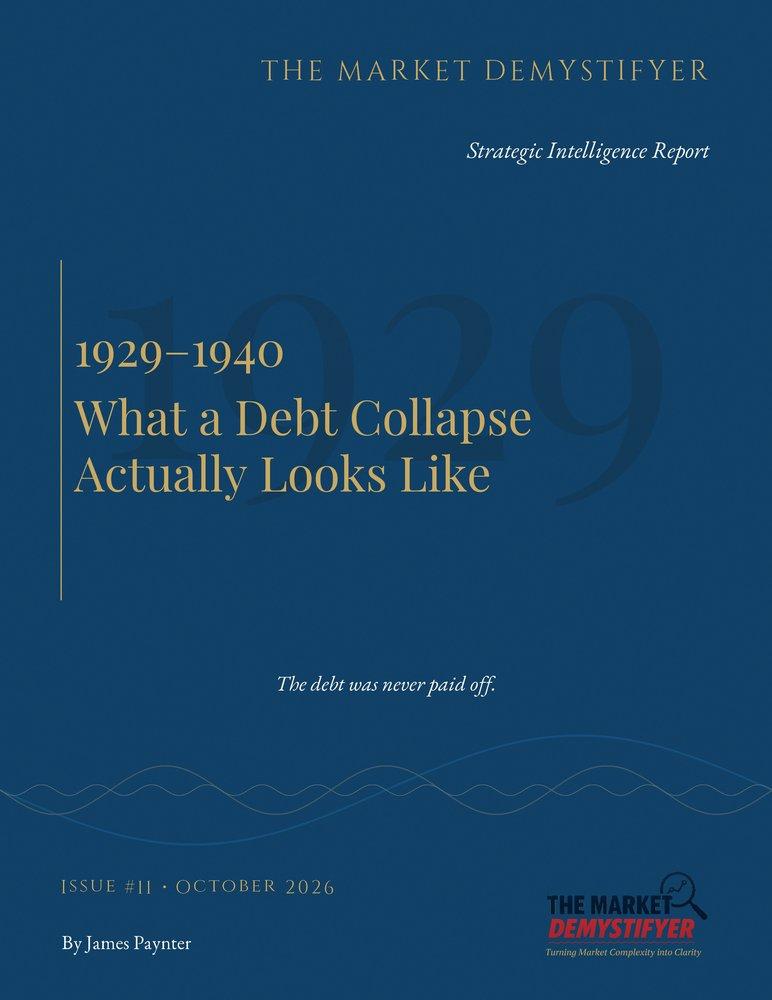
Issue 11October 2026LATEST
The belief it takes apart
In the end, it took a world war to pay off the debts of the 1930s.Start with this issue →
Limited-time openingThe monthly strategic intelligence report
Limited-time pricing closes 11:59pm SAST, Friday 27 November
For over 20 years I have published my forecasts and scored every one of them in the open, the ones that worked and the ones that did not...now I turn the same test on the things you were taught about money...
Almost everything you were taught about money, markets and the economy rests on one assumption. Get this wrong and your hard-earned wealth is at risk. Get this right, and you not only keep the value of your wealth, but add to it – for you and your loved ones.
Which side do you want to be on?
Your hard-earned wealth is at risk from an assumption you have never questioned, and further down this page I show you what it is.
Most of what we believe about money, we never worked out for ourselves. We picked it up at school, in a business degree, from a bank’s newsletter, or from a headline repeated so often that it started to sound like a fact.
For example:
Makes sense in theory. But what is the reality?
The reality is that when everybody believes something, nobody bothers to check it. So it sits there underneath one decision after another, and the damage it does is slow and quiet, and almost never traced back to the belief that caused it.
That is how hard-earned wealth gets lost. Not in a crash anybody can name afterwards...
...but in a hundred ordinary decisions, each one reasoned carefully from something that was never true.
The usual fix is to pay for better information...
...and it doesn’t work.
Each one came with more charts, more commentary and more so-called ‘experts’ telling you, with great confidence, what gold would do next (and contradicting each other by lunchtime). After a year of it you had read a huge amount, and changed almost nothing about how you actually hold your money.
Take 2008. Here is what the people at the very top were saying, and what followed.
S&P 500, weekly close, 2004 to 2009
119 Oct 2004
Alan Greenspan, Fed Chairman, in a speech to America’s Community Bankers:
“…a national severe price distortion seems most unlikely in the United States, given its size and diversity.”
Federal Reserve Board, speech, 19 Oct 2004
228 Mar 2007
Ben Bernanke, Fed Chairman, testifying to Congress’s Joint Economic Committee:
“…the impact on the broader economy and financial markets of the problems in the subprime market seems likely to be contained.”
Federal Reserve Board, testimony, 28 Mar 2007
317 May 2007
Ben Bernanke, at the Chicago Fed’s bank structure conference:
“…we do not expect significant spillovers from the subprime market to the rest of the economy or to the financial system.”
Federal Reserve Board, speech, 17 May 2007
414 Mar 2008
The Fed says it “will continue to provide liquidity as necessary to promote the orderly functioning of the financial system”. Its Board “voted unanimously to approve the arrangement announced by JPMorgan Chase and Bear Stearns this morning.”
Federal Reserve Board, press release, 14 Mar 2008
515 Sep 2008
Lehman Brothers Holdings files for Chapter 11 bankruptcy.
US Bankruptcy Court, S.D.N.Y., Case No. 08‑13555
69 Mar 2009
The S&P 500 closes at 676.53, down 57% from its 1,565.15 close on 9 Oct 2007.
S&P Dow Jones Indices, daily closes
If you were taking your advice from services that repeated what the Fed was saying...
...you were being set up for one of the biggest crashes of our lifetime.
None of it worked, because those services were built on the same inherited beliefs you already had. They gave you more analysis, faster, with prettier charts (some of them genuinely beautiful).
But here’s the problem:
If the belief underneath is wrong, more information won’t make the answer right.
What was missing was somebody prepared to go back and check whether the beliefs your money is standing on were ever true.
You read widely, you check more than one source, you wait when waiting makes sense and you act when the case looks solid. And yet the decision still turns out wrong more often than it should.
The trouble is the belief you started from, and that is the one thing nobody asked you to check.
And as I found, acting on a wrong belief comes with costs – often very painful and personal ones.
Long before I forecast anything for anyone, I helped run a family business that leased stainless steel tank containers offshore, in US dollars, for South African investors. Dollars came in. Rand went out.
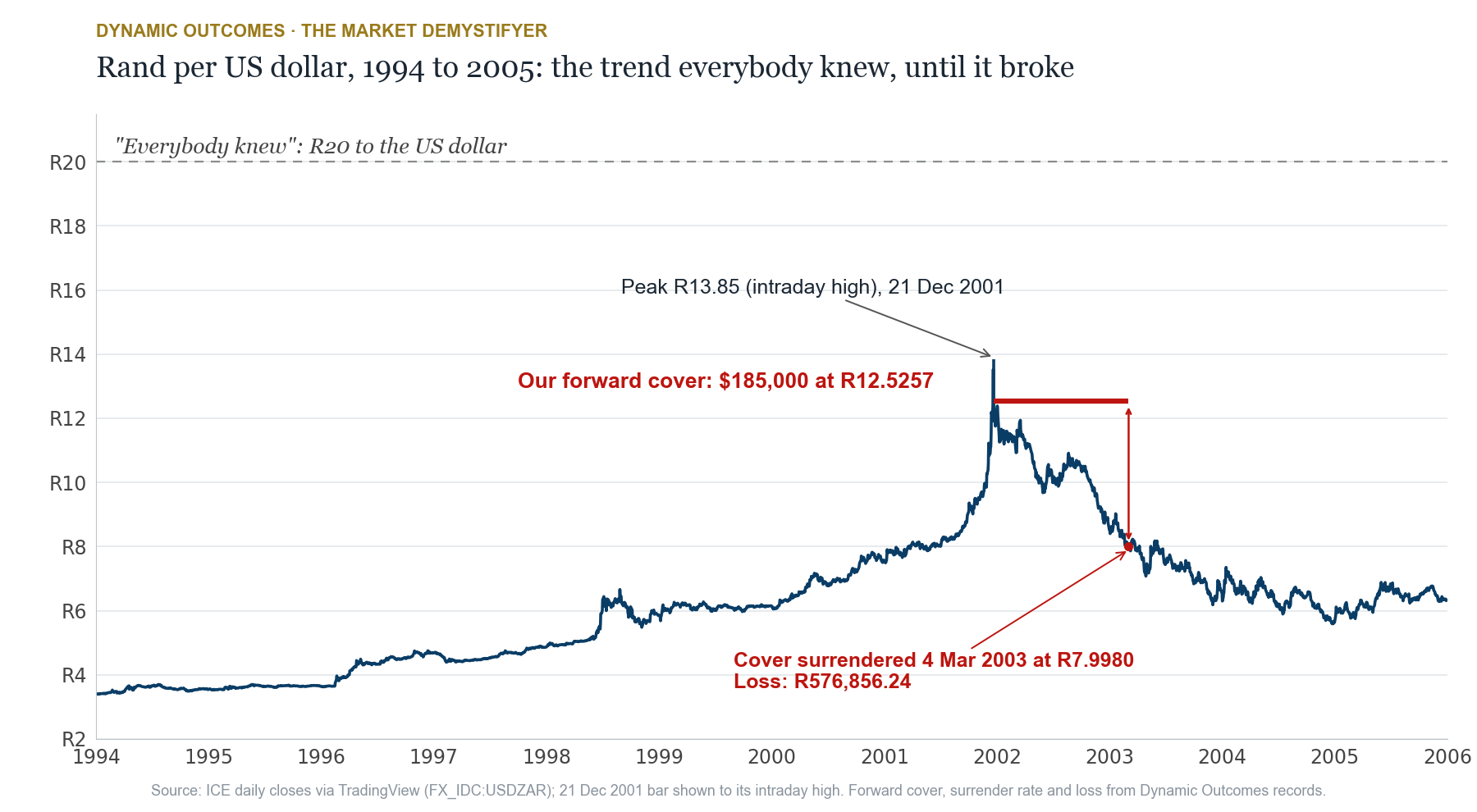
By December 2001 the Rand had been depreciating for thirty years. It had gone from about 3.30 to the US dollar in 1994 to 13.85. Everybody knew where it was going next. The talk was R20.
So we in our wisdom decided not to cover our investors’ dollar income at all, because why would we, when we could get another R6 per dollar. Instead we “prudently” covered the shipping costs on the new tanks we had on order.
$185,000 of it, at an average of 12.5257.
Within days, the Rand started moving the wrong way. Not a small correction. A reversal.
I told myself it was a temporary pullback. Every expert I read said the same. By December 2002 the Rand was at 8.60.
Every week I looked at those contracts, worth less each time, and told myself the same thing: “Wait, the Rand will weaken again – it must! Just hold on...” And every week, it didn’t. The investor enquiries dried up. The new tank orders were cancelled.
On 4 March 2003 (I still remember the date), at R7.9980 to the US dollar, we could take no more pain. I surrendered what was left of that cover.
And swallowed R576,856.24 (US$72,125.06) in forex losses.
But the Rand did not stop at R7.9980/$. It kept strengthening for another twenty-one months, to 5.60 by December 2004. I hadn’t sold at the bottom of the market. I had sold at the bottom of my own endurance.
Everybody knew the Rand was going to R20. Everybody was wrong.
Not one of us had questioned it, because we all knew.
This led me on a voyage of discovery to find out what ACTUALLY moves the markets, why we and so many others made such a terrible decision – and how to avoid this in future – which turned into a forecasting service.
Since 2005, I have published 9,587 scored forecasts, and every one of them is graded against what actually happened, in the open, where anybody can go and look.
Publishing your record stops you telling yourself stories. And over 20 years of being graded, a pattern came out of it that I did not expect: the expensive mistakes almost never came from a bad reading of a chart. They came from an assumption sitting underneath the reading that nobody had thought to question: that people behave rationally with their money. Markets do not.
So I started testing the assumptions instead, one a month, and writing down what I found.
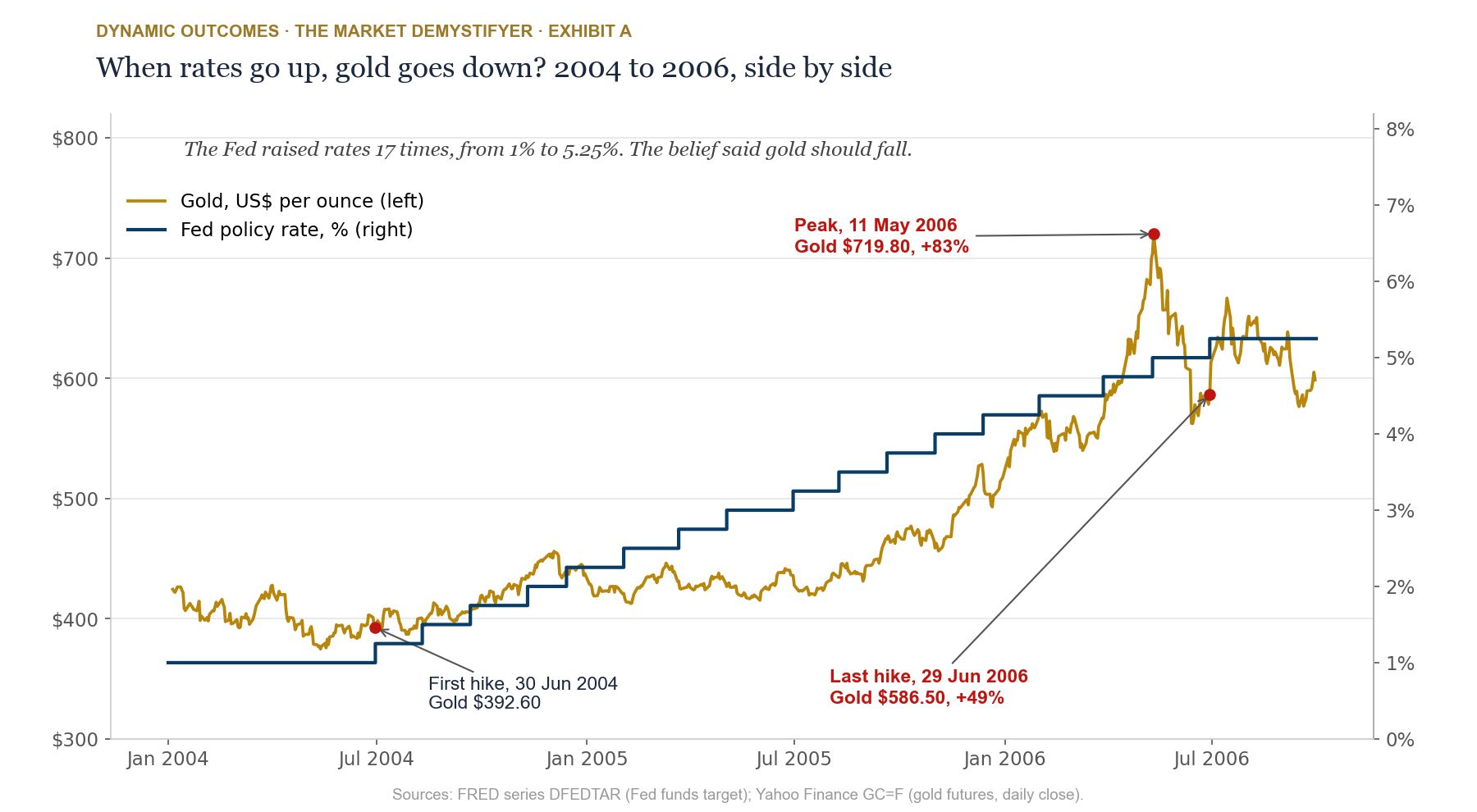
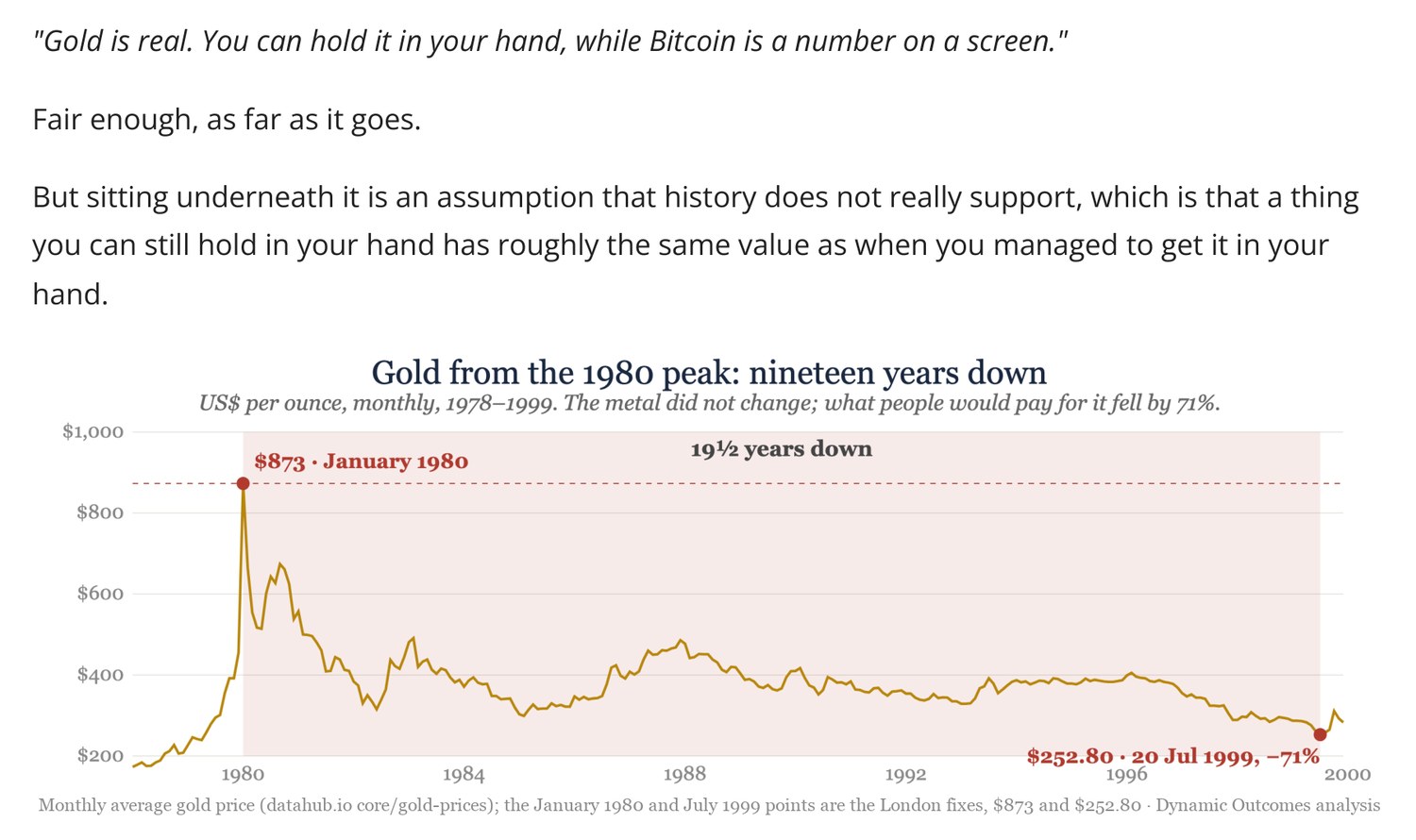
A rational market sells gold when interest rates rise. Cash starts paying, gold never has, so the money moves. It is in the textbooks, it is on the business channels, and almost nobody who repeats it has laid the two series side by side before putting money on it.
If gold were the only example, you could put it down as the exception and keep the rule. So let’s put another one to the same test.
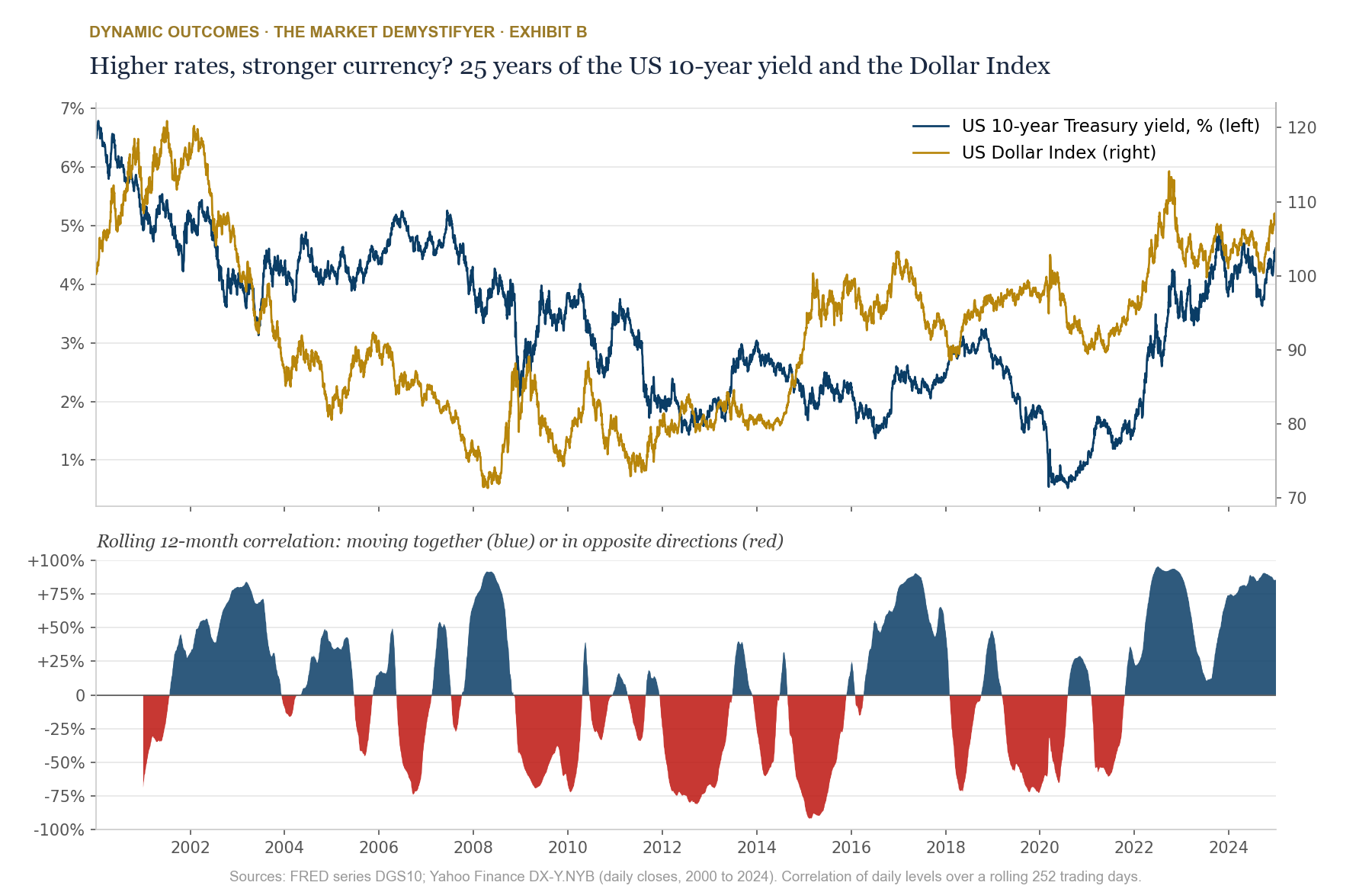
A relationship that swings between +80% and −80% over the period is hardly the lockstep the rule of thumb would have you believe. So if you are positioning your money on that rule, you are carrying a risk the rule never mentions.
And it isn’t only prices you can test this way.
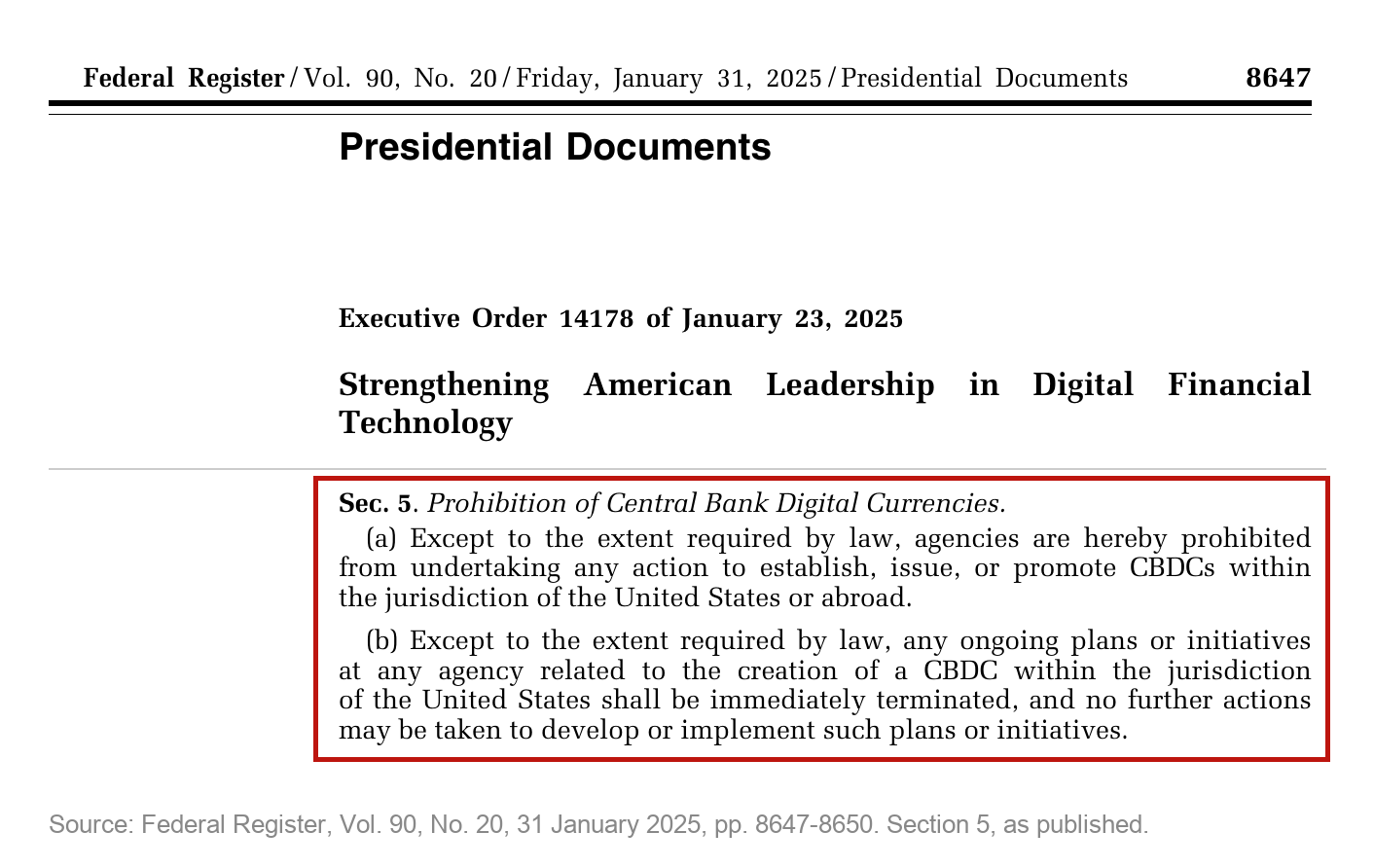
There is a lot of talk about a central bank digital currency being set up in the US. This is the order itself, as published in the Federal Register, and it specifically prohibits one. The highlight on the page is ours.
It is one thing just believing something that isn’t true. But when you act on that assumption, the results can be very costly...
The belief said: rates are going up, so sell your gold.
If you had listened and sold $100,000 in gold in June 2004 instead of holding on, you would have missed out on your gold holdings going to $149,000 in value by the time the Fed made its final hike two years later.
That is a $49,000 difference, from one belief nobody had checked.
That was 2004. But the same false beliefs are still circulating around us...
...and here’s where it gets really tricky...
Let’s look at some more examples...
Bitcoin has been sold to you as a hedge, a way to lower the risk on the rest of your wealth. Here is what it did in the three crises it was supposed to protect you through, against the stock market it was supposed to be uncorrelated with.
Fall from peak to low, three crises
Each market from its own peak to its own low in the window, on daily closes.
March 2020 crash
2022 rate hikes
April 2025 tariff shock
March 2020 crash
2022 rate hikes
April 2025 tariff shock
And interest rates? You will hear them forecast by people who tell you, in the same breath, that the Federal Reserve controls them.
In both cases, whoever is explaining it to you is working from a belief he was taught. And the more of your money that rides on that belief, the more it costs you when it turns out to be wrong.
Announcement
That’s why, after more than 20 years of making predictions in the markets, I have decided to put together a report so you don’t make these costly mistakes.
Introducing The Market Demystifyer
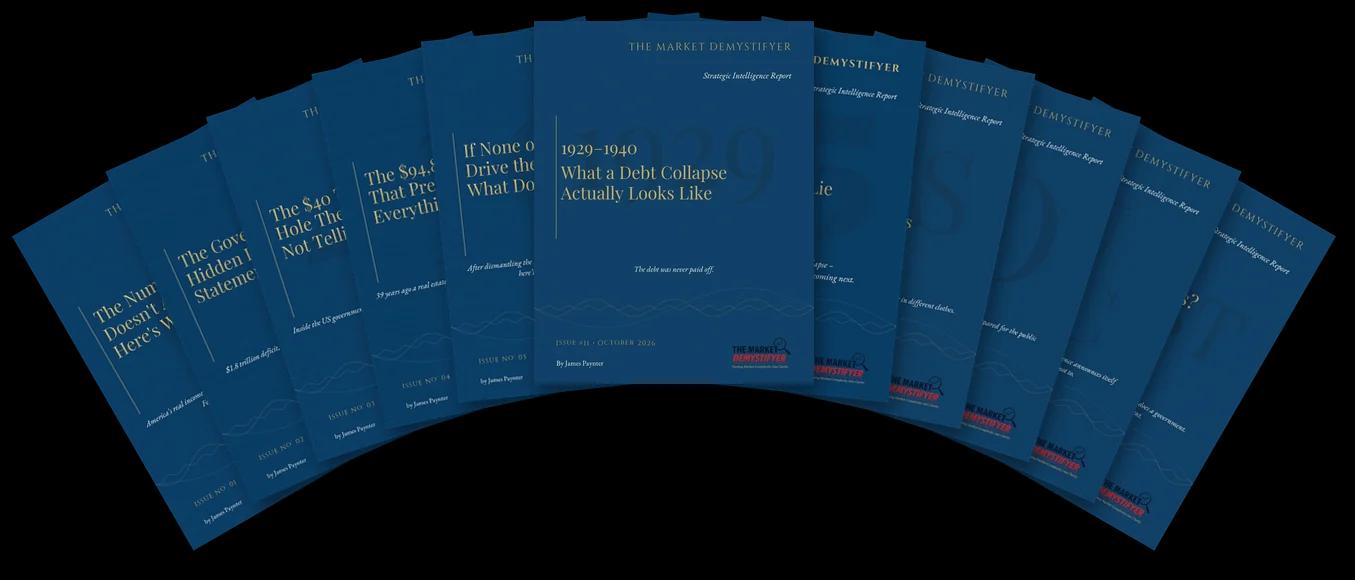
11 issues published
Each month I take one belief that almost everyone holds, trace it back to where it came from, test it against the historical record, and work out what holding it has been costing you.
You see the whole thing worked through, step by step, with the charts and the sources, so you can follow exactly how I got there.
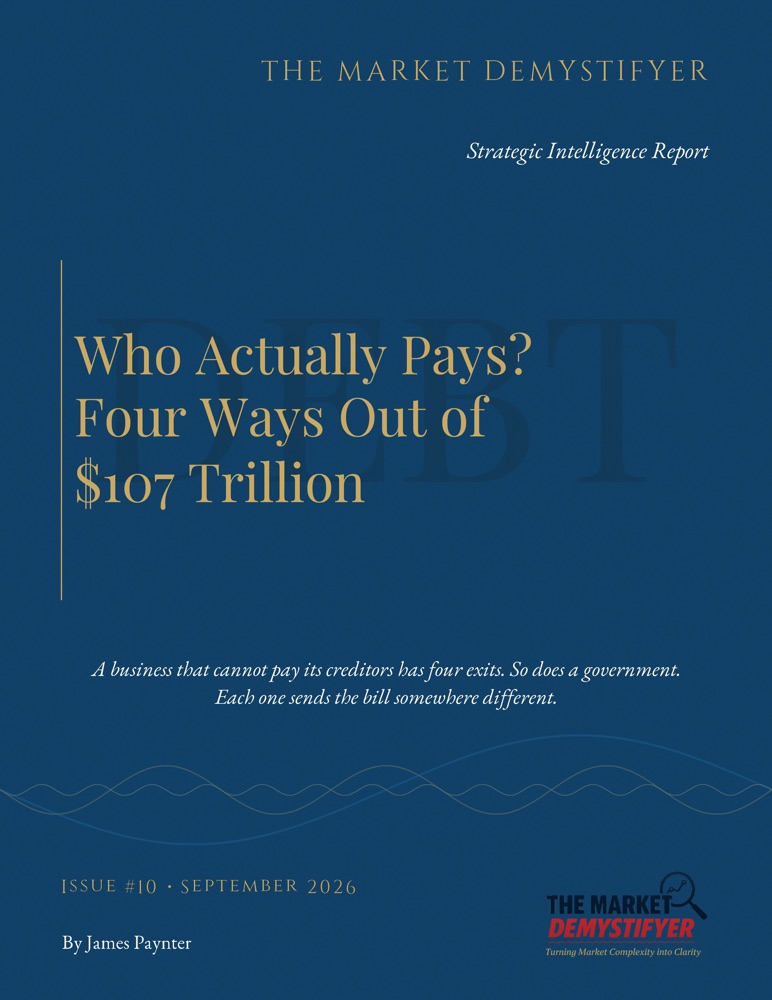
Published issues take apart who actually sets interest rates, whether higher rates really strengthen a currency, whether rising rates really sink gold, whether tariffs cause inflation, whether economic data predicts the US dollar at all, what the Dollar Index is actually measuring, and a currency reset that does not appear in a single executive order.
You choose which issue you start with: the one whose belief you most want settled, whether or not it is the latest.
All of this has one purpose: to protect your wealth...
...and help you make better decisions with it, because the belief underneath each decision is one you know has been tested.
Choose your issue
Choose the one that argues with something you hold.
Issue 11October 2026LATEST
The belief it takes apart
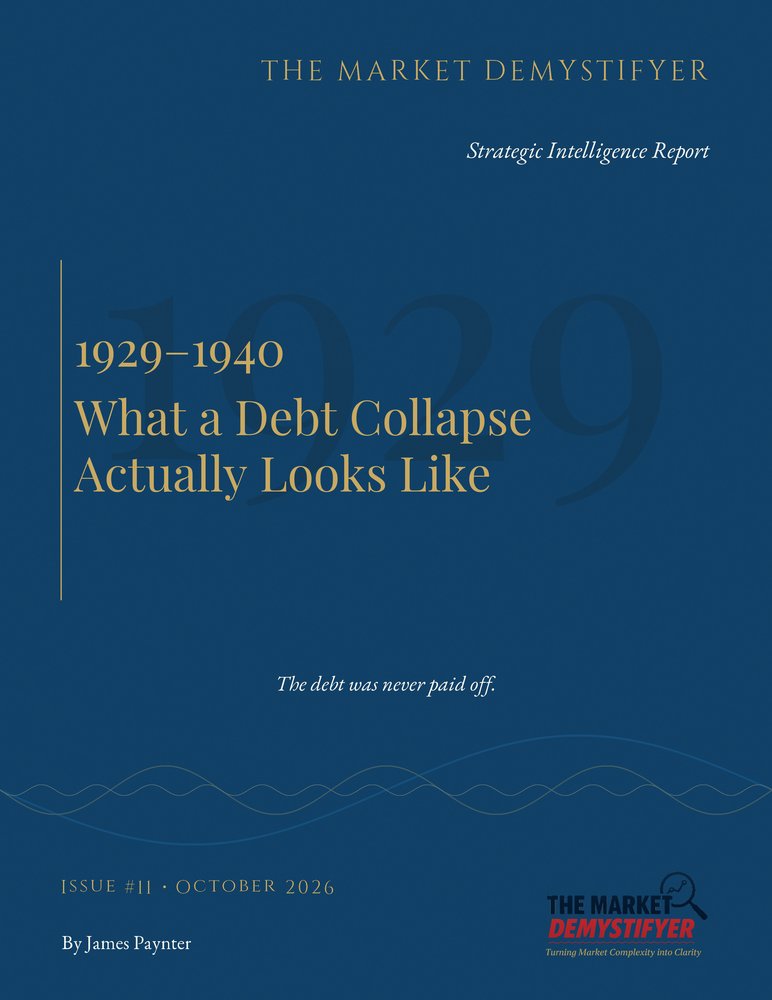
In the end, it took a world war to pay off the debts of the 1930s.Start with this issue →

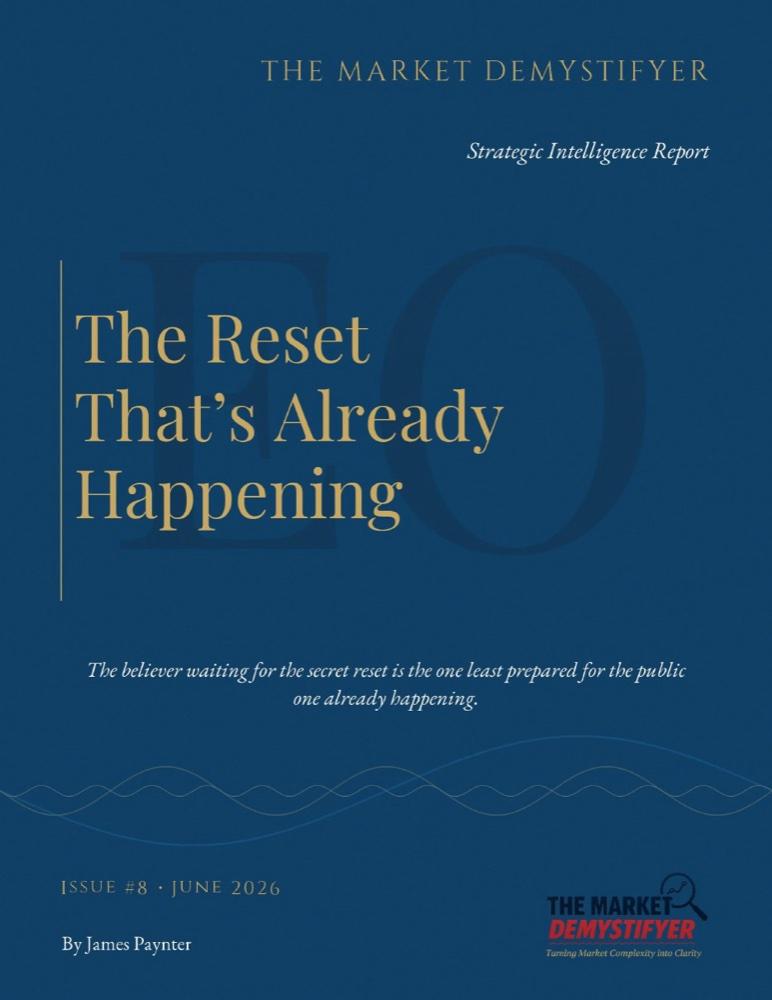
Issue 08June 2026
The belief it takes apart
The reset is a switch someone is about to flip.Start with this issue →
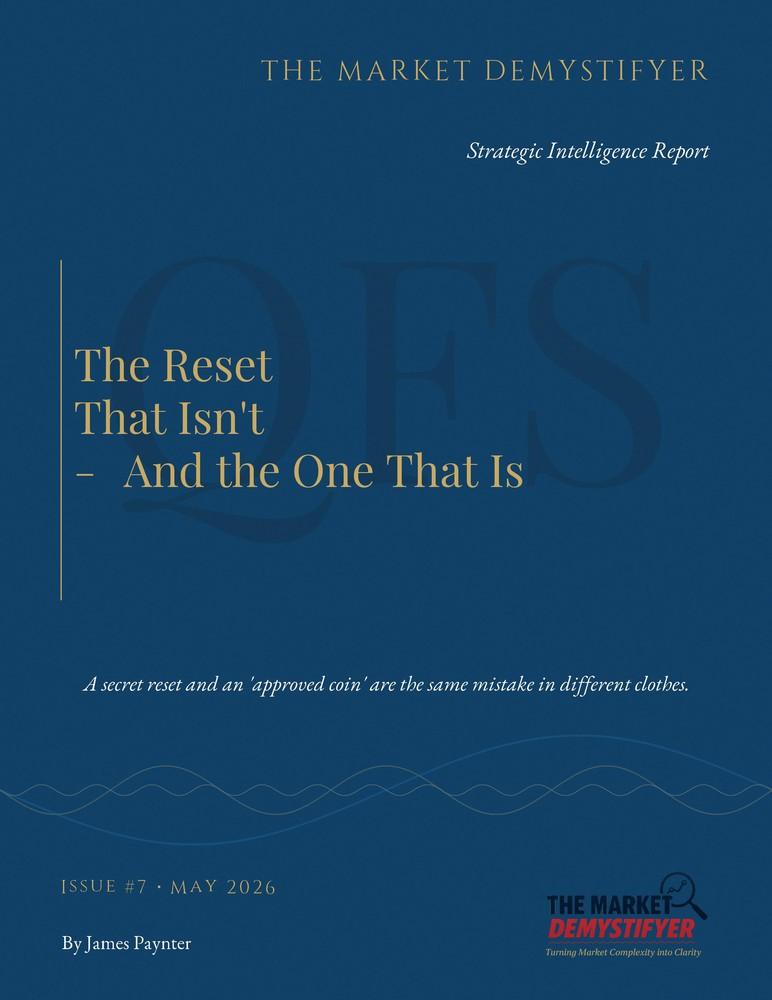
Issue 07May 2026
The belief it takes apart
A reset is coming overnight: QFS, NESARA, a gold-backed currency, a debt jubilee.Start with this issue →
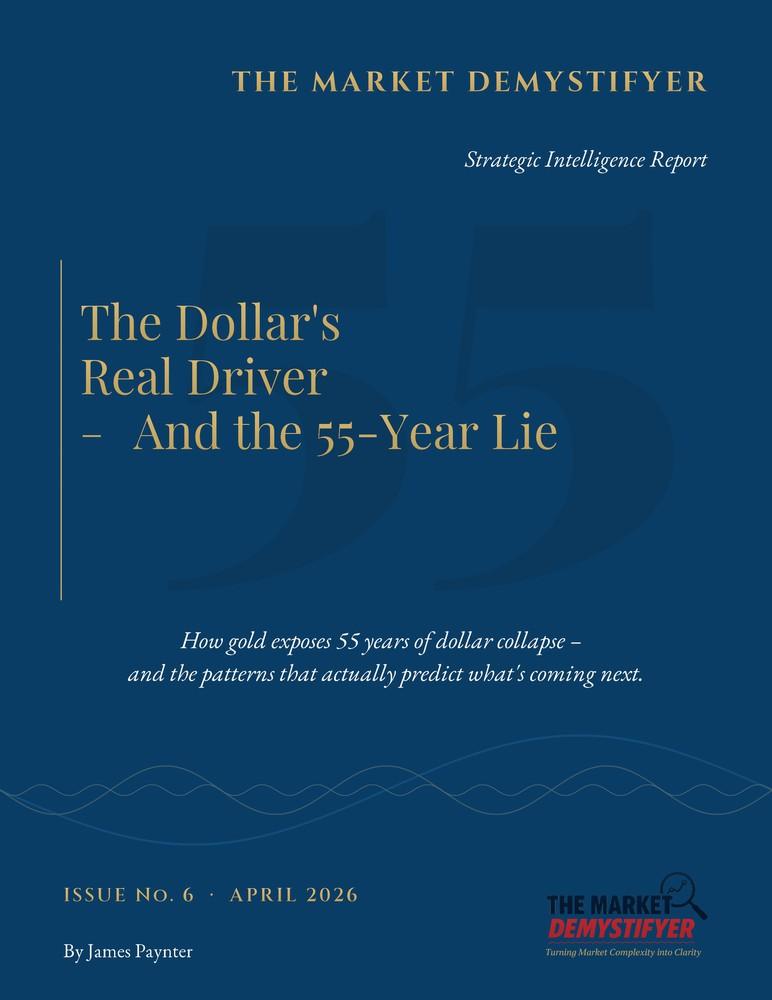
Issue 06April 2026
The belief it takes apart
The US dollar is stable, and DXY tells you how it is doing.Start with this issue →
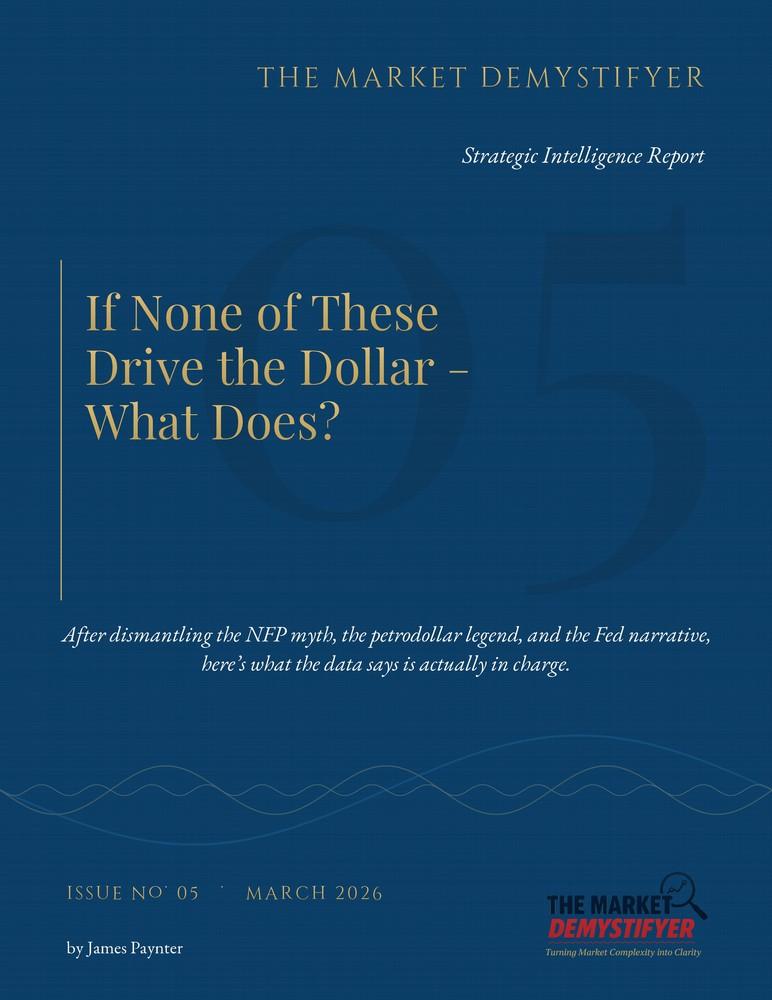
Issue 05March 2026
The belief it takes apart
Economic data predicts the US dollar.
This issue tests what does not move the US dollar. What does is the subject of Issue 6.
Start with this issue →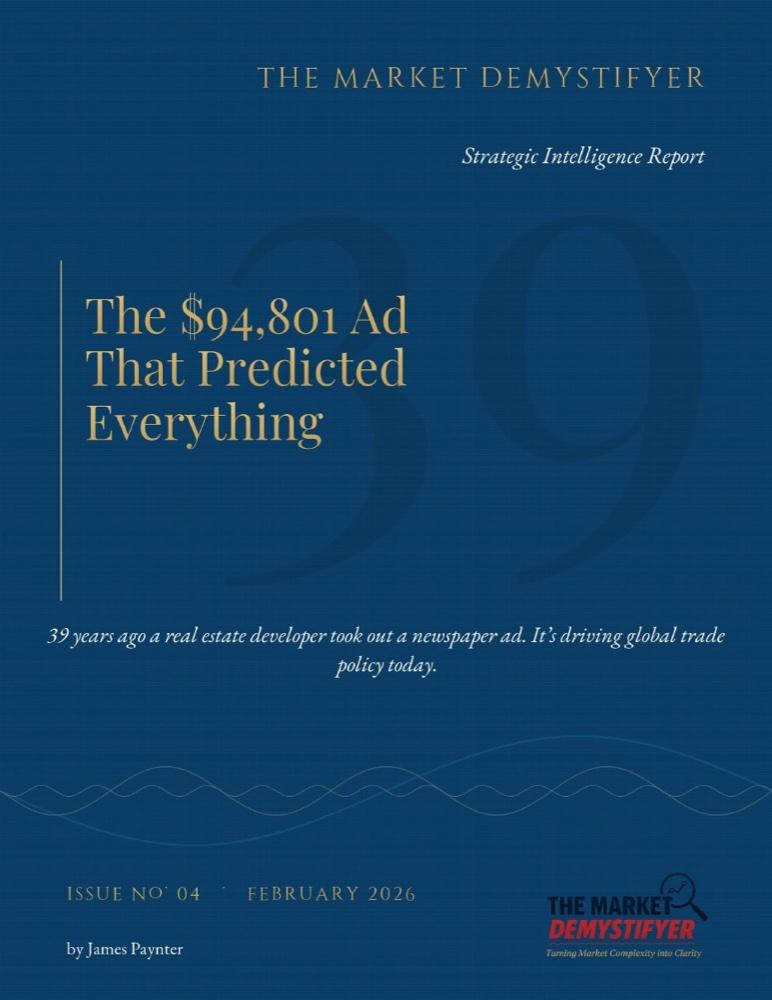
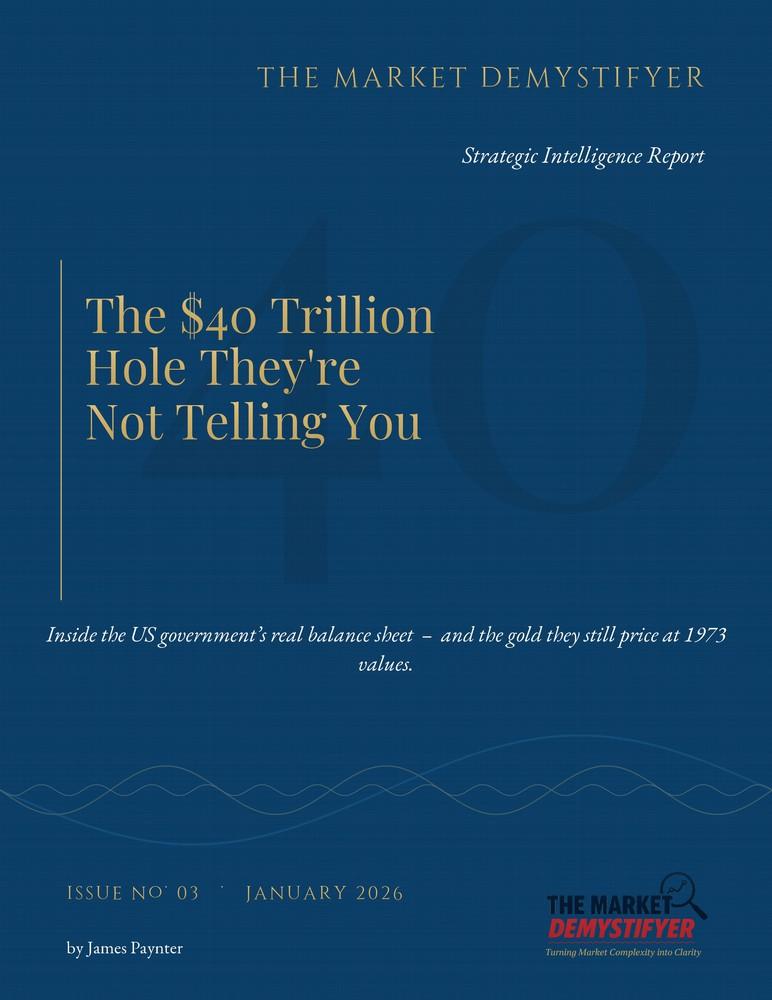
Issue 03January 2026
The belief it takes apart
When interest rates go up, gold goes down.
This issue opens by asking you to read Issues 1 and 2 first.
Start with this issue →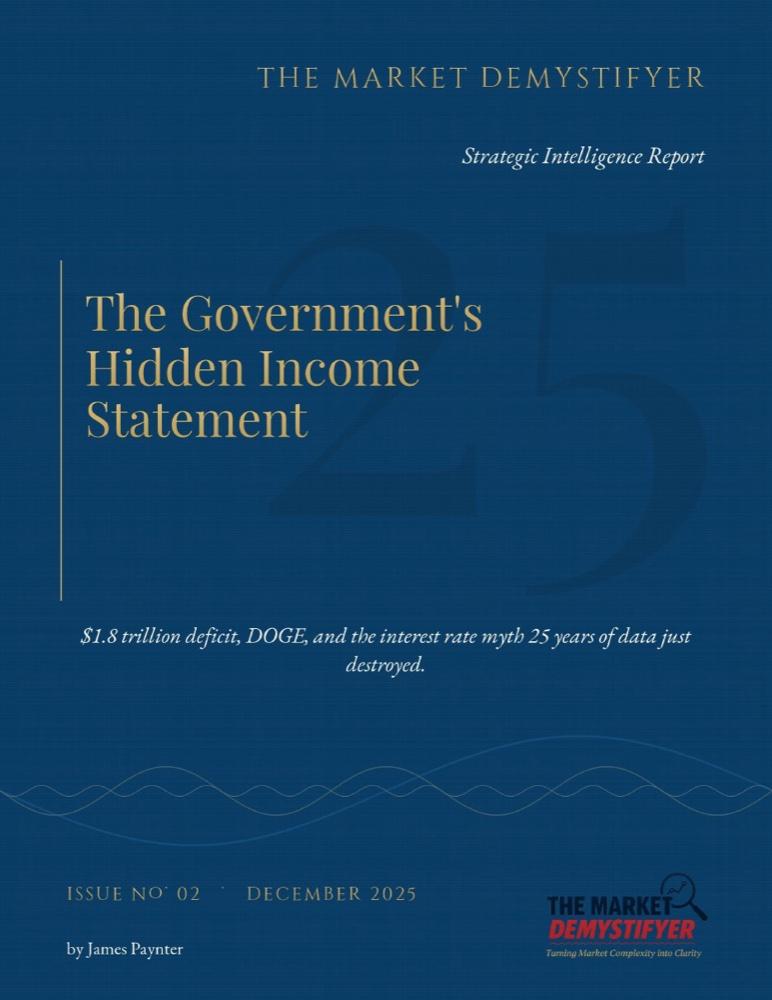
Issue 02December 2025
The belief it takes apart
Higher interest rates mean a stronger currency.Start with this issue →
Issue 01October 2025
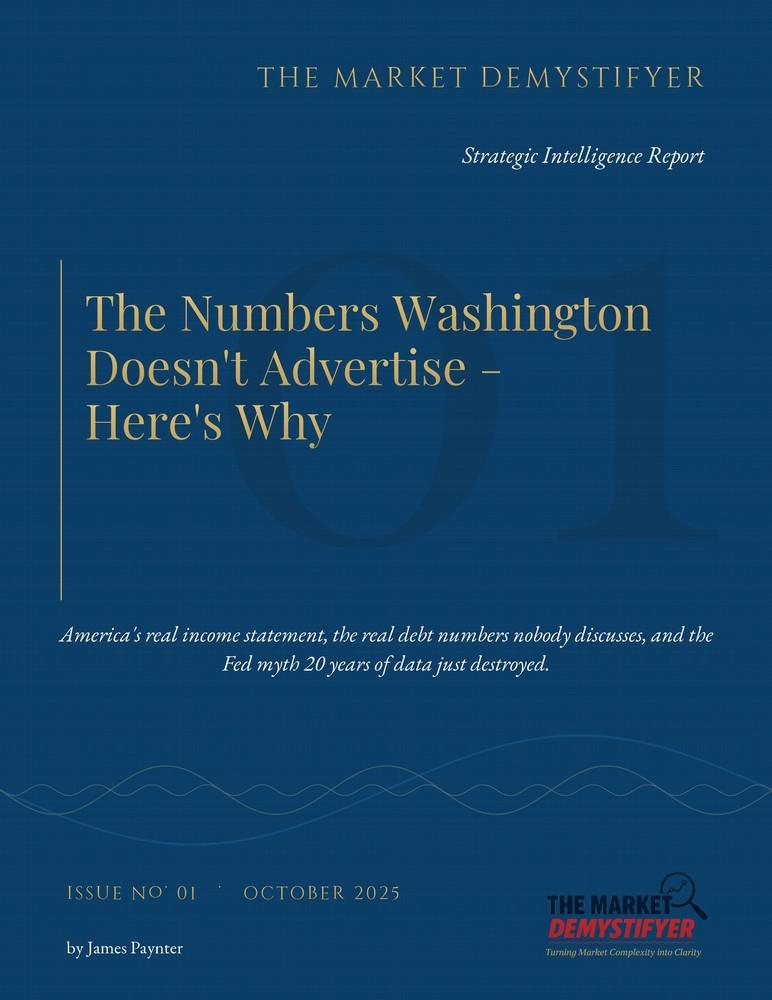
The belief it takes apart
The Federal Reserve controls interest rates.Start with this issue →
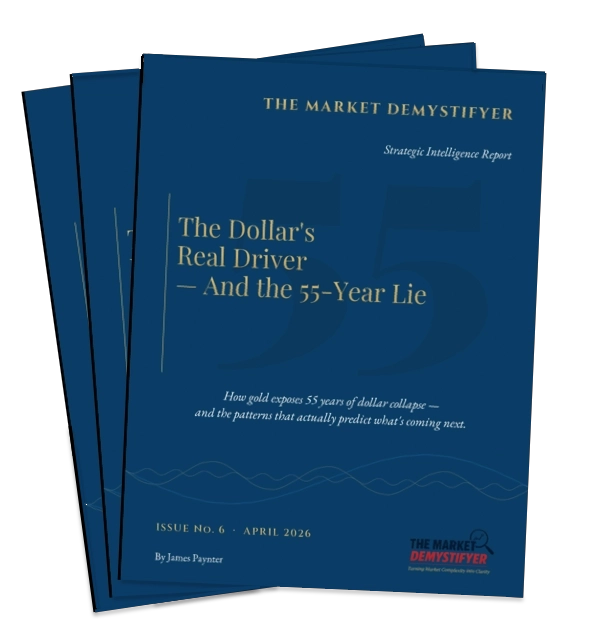
One published issue of The Market Demystifyer, chosen by you
What it does for you: you see in dollars what one unchecked belief has been costing you, so you can stop putting money behind it.
Without it, you keep acting on the belief, and what it costs you never shows up on any statement.
Two months of Market Demystifyer Pro
What it does for you: two more beliefs get the same treatment, and the risk you are actually carrying becomes easier to see.
Without it, you stop at one belief, and the rest go unchecked.
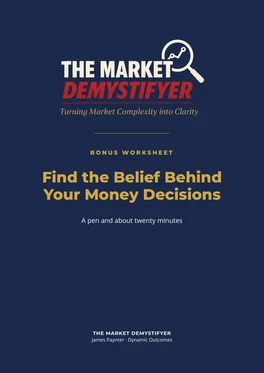
Find the Belief Behind Your Money Decisions
What it does for you: you find out which of your own decisions rests on a belief nobody checked, and which issue covers it.
Without it, you are relying on whoever handed you each of those beliefs to have checked it first.
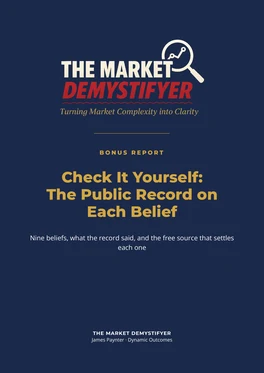
Check It Yourself: The Public Record on Each Belief
What it does for you: you don’t have to take my word for it, or anyone else’s. When the next claim comes along, you can check it yourself before you act on it.
Without it, you have to take every new claim on trust.
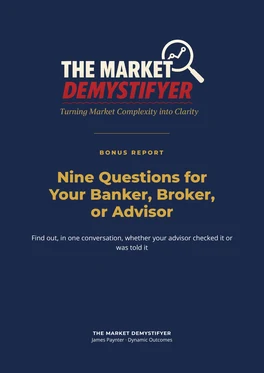
Nine Questions for Your Banker, Broker, or Advisor
What it does for you: the person positioning your money acts on what he believes, and you never see the belief, only the recommendation it produced. These nine show you the belief.
Without it, you are judging his conclusions without ever seeing his premises.
Torn Down Live
What it does for you: you watch it done live, with the record open, rather than only reading the result.
Without it, you only ever see it on the page.
Included
I take one belief apart on screen, with the record open, in front of the people who bought.
Tell me which belief you want taken apart, and I will work through the ones that come up most. It happens after this offer closes, so only buyers will be there, and once the offer closes nobody else can get a seat. It is recorded too, so if you can’t make it live, you won’t miss anything.
One unchecked belief in Exhibit A was a $49,000 difference on $100,000.
Each issue takes a month. Most of that time goes on the research: going back to the primary sources, pulling the data, tracing where each number came from, and making sure it is the correct version before I write a word.
The data behind it is kept up all year round, whether an issue goes out or not. And what lets me judge any of it is more than 20 years of scored forecasts, which did not come cheap either.
After the two months, Pro continues at $49 a month. Cancel any time.
Everything $67 buys

The table above totals these at $311. You pay $67, once.
60-day money-back guarantee. Write to us within 60 days and we refund everything you paid at checkout, including the $47 library if you add it.
The first $49 is charged on the day your guarantee ends, then $49 each month. Cancel any time, and the next renewal stops.
The $67 price and the four bonuses end at 11:59pm SAST, Friday 27 November. After that, what you have already bought stays yours.
The rest of the library
At checkout you can add every other published issue for $47, which is less than two issues at $29 each.
$67 once, then $49 a month after the two months. Cancel any time.
That is long enough to read the issue, open the reference sheet, pull one of the series it names, and check a figure against the source yourself.
If you are not completely satisfied, write to us inside the 60 days and we refund everything you paid at checkout in full, including the $47 if you added the rest of the library. You keep the four bonuses. Pro does not renew until your 60 days are up.
A monthly strategic intelligence report. Each month it takes a belief almost everyone holds about money or markets and tests it against the record, using real examples. We name all our sources, and every chart shows where its data comes from, so you can look up the figures for yourself.
No. The report is about the beliefs you have been taught and what acting on them has been costing you. The forecasts are part of Pro, and your two months of Pro include the fortnightly forecasts. But you don’t need them to get the value out of the report.
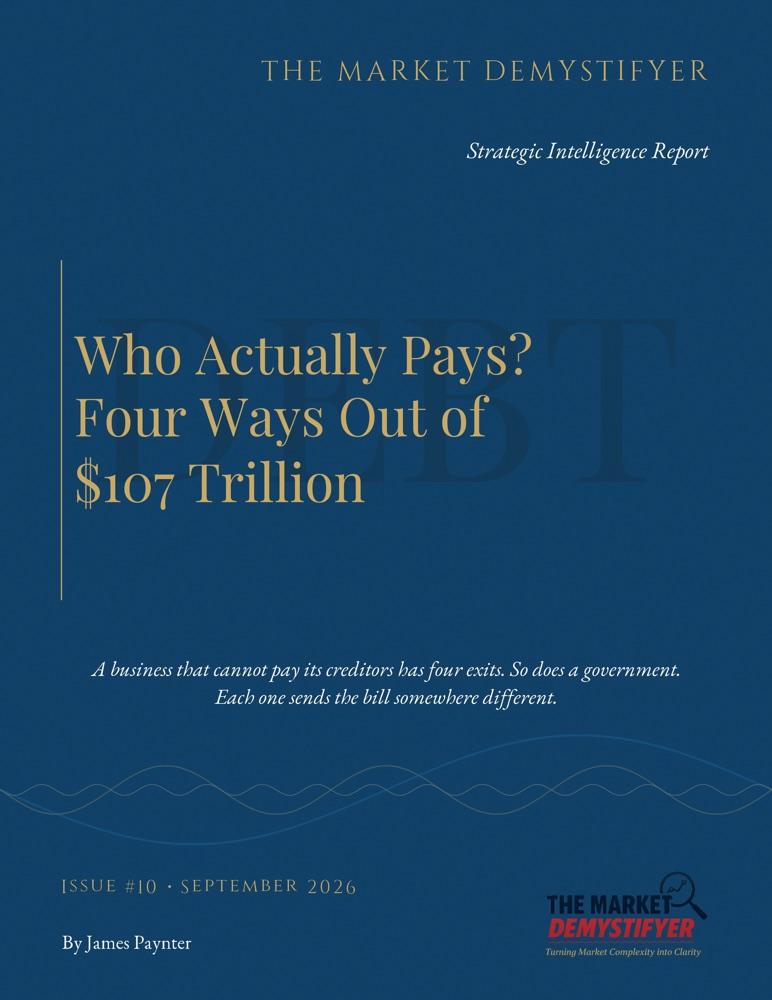
The one you choose. Every published issue is shown above with its cover and the belief it takes apart. Press the button under the cover you want and that is the issue in your order. The next two issues come to you as they publish, and if you want every other published issue as well, checkout offers them together for $47.
No. Each issue explains its subject from the ground up, in plain English. Where a chart makes the point, the text beside it tells you what to look at.
Stripe emails you a receipt. Your issue and your portal login follow in a separate email, usually within a few minutes. Everything you buy sits in your portal, so you can read it on any device and come back to it whenever you want.
One sitting a month. Each issue is written to be read through once, properly. It stays in your portal and access does not expire, so there is no deadline for reading it.
It continues as Market Demystifyer Pro at $49 a month, first charged on the day your 60-day guarantee ends. You can cancel at any time, and cancelling stops the renewal without taking back anything you have already paid for or already hold.
You have 60 days to ask for a full refund of everything you paid at checkout: the $67, plus the $47 if you added the rest of the library. You keep the four bonuses: the three bonus reports and your place on Torn Down Live. Just write to us within the 60 days.
You shouldn’t (at least not yet). Exhibit C above names the order and the section that matters. Read it for yourself, and if it doesn’t say what I say it says, close the tab. Exhibits A and B name their data series too, on FRED and Yahoo Finance. Both are free, and neither asks you for an account.
No. The weekly review is where the track record was built, and it covers what the Rand did that week. The Market Demystifyer is global: the US dollar, gold, Bitcoin, the euro, US equities, and the beliefs underneath all of them, with one belief taken apart properly each month.
The $67 price and the four bonuses come off at 11:59pm SAST on Friday 27 November 2026 (4:59pm EST). Nothing you have already bought or can already access is affected.
The only question is whether you want the wrong ones standing between you and your hard-earned wealth.
Choose your issue and start – $67$67 once, then $49 a month thereafter.